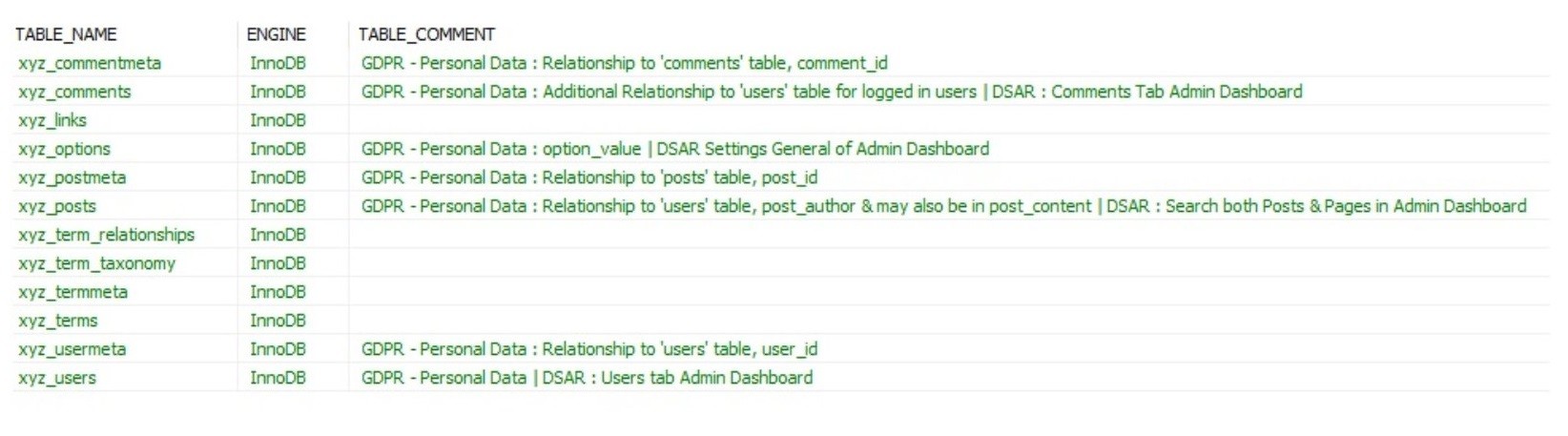
As a child I can remember my parents explaining the importance of knowing my tables. Yes at that age they relating to my multiplication tables and mathematics. In this digital age the sentiment is the same but the subject matter now relates to database tables, in particular WordPress in the new world of the General Data Protection Regulations (GDPR); in particular which tables have the fields that can store ‘process’ personal data.
Information You Hold
As part of the updated guidance from the UK regulator, the Information Commissioners Office (ICO) “preparing for the GDPR”, I noted carefully the second step 2 “Document what Personal Data your Store” and used this as part of my ongoing information audit/data mapping exercise. To assist, I setup a new instance of WordPress, changing the default database table prefix to ‘xyz_’ and proceeded to populate the site with every possible option; pages, posts, comments, added new users, different roles etc. I then queried the database tables to see exactly what had been stored and where. Doing this has enabled me to apply ‘comments’ to the WordPress tables themselves, resulting in the graphic below. There are two options/opinions within the comments. Whether the table is likely to process personal data (processing being just about anything you can think of doing with such data, including storage, retrieval etc.) and secondly, if the table was to store personal data, how easy would it be to be able to export it or provide the information back to the individual ‘Data Subject’ in response to a subject access request.